STAGES 1–2
Sketch and maquette
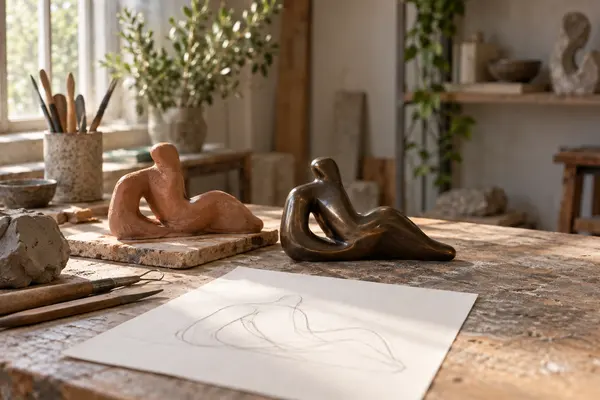
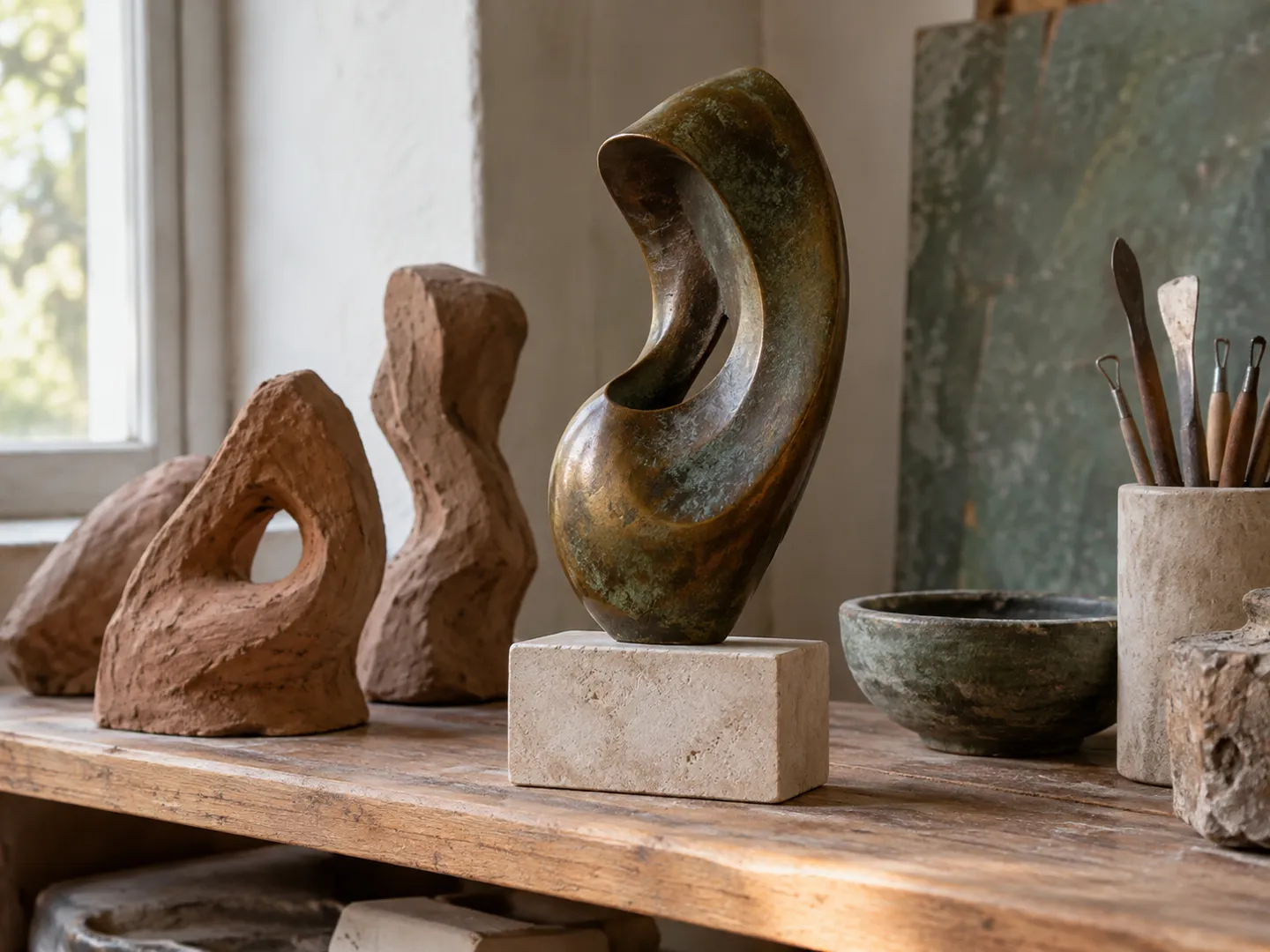
Ideas start on paper, then become small models in clay that let the sculptor test the form before going big.
See Moore's maquettes doodlesculpture
00HOW SCULPTURE IS MADE
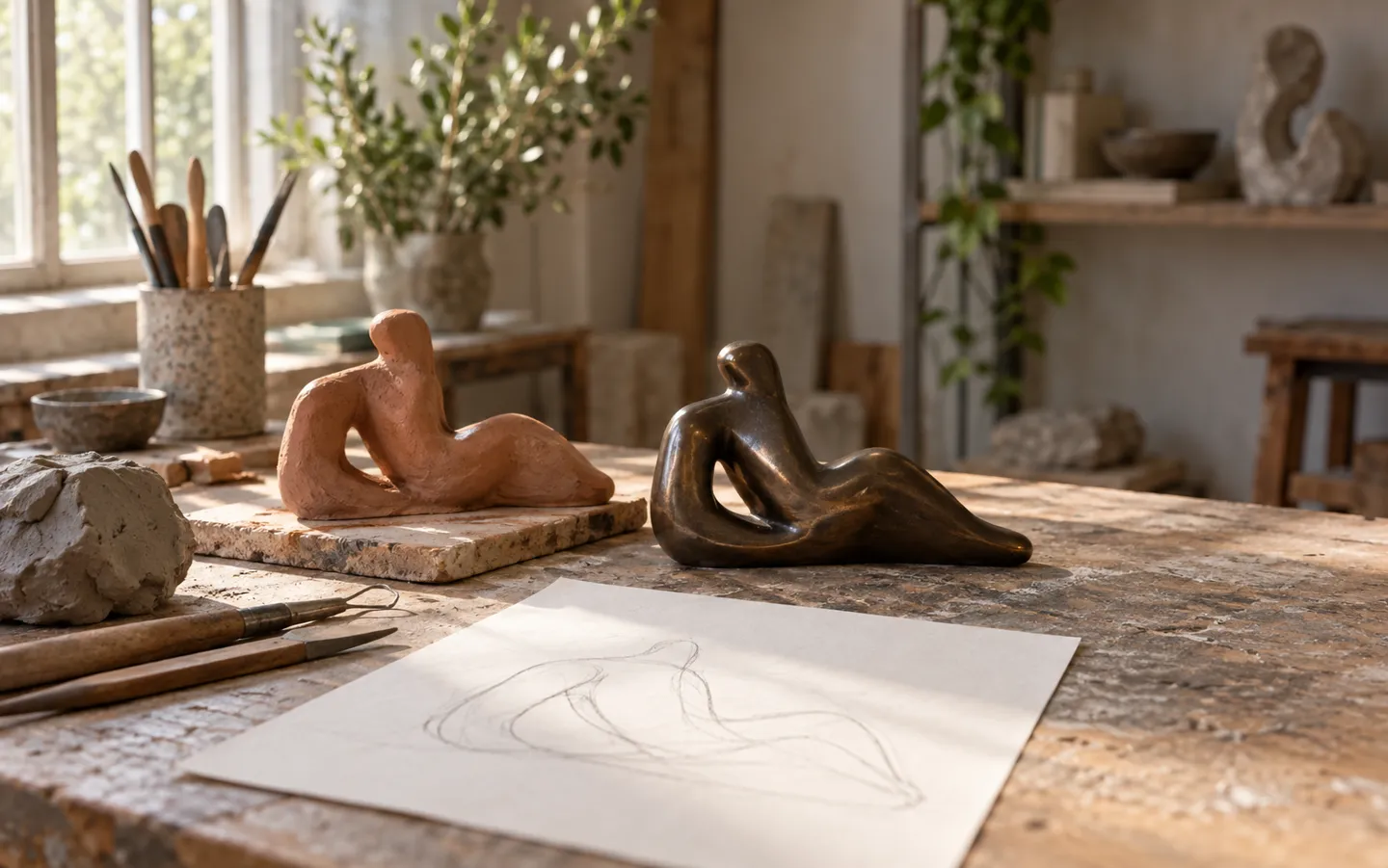
Every bronze sculpture starts as something soft: a pencil line, a lump of clay, a sheet of wax.
The method that turns them into metal, lost-wax casting, is at least 6,000 years old and still used by foundries today. Here is how it works, stage by stage, in plain English.
Plain English, with the sources linked.
Follow the six stages01Principles
02THE SHORT VERSION
The wax is lost so the bronze
can take its place.
STAGES 1–2
Ideas start on paper, then become small models in clay that let the sculptor test the form before going big.
See Moore's maquettesSTAGES 3–4
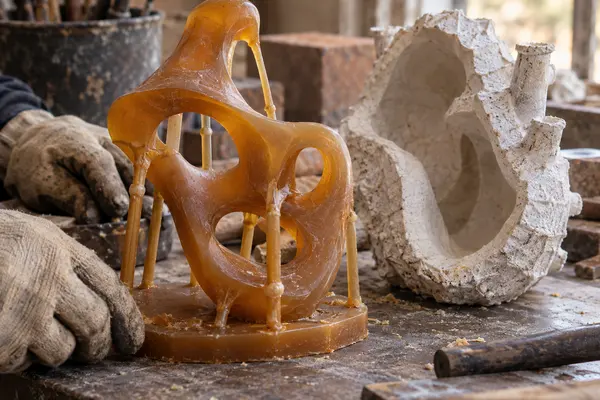
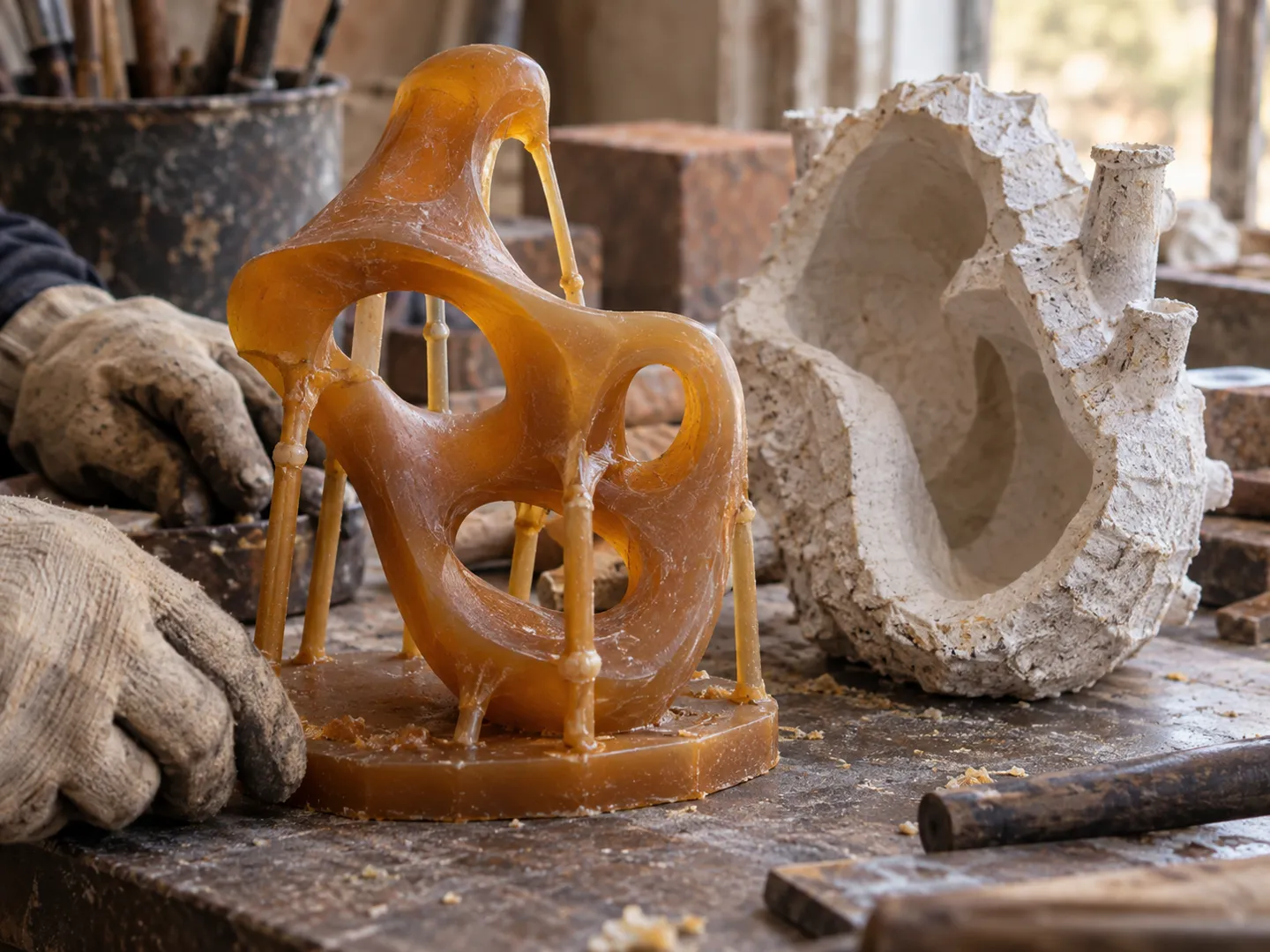
A hollow wax copy gets channels for the metal, is encased in a heat-proof mould and melted out.
Follow the journeySTAGES 5–6
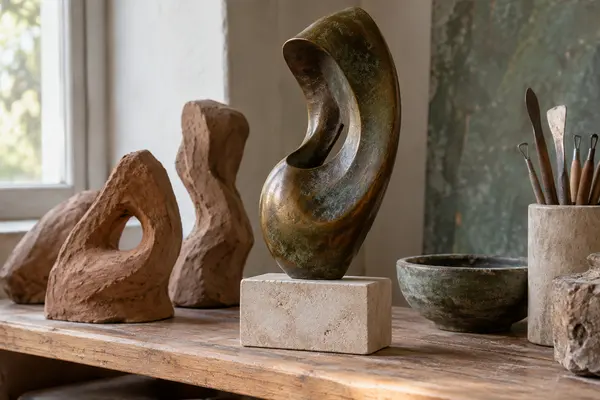
Molten bronze fills the gap, the mould is broken away and the surface is coloured with a patina.
What to look for03THE JOURNEY, STAGE BY STAGE
Pick a stage to see what happens to the work at that point. The steps follow the accounts published by the Getty Museum and the North Carolina Museum of Art.
Foundries vary in the details and materials they use. This is the classic sequence, not a workshop manual.
04TWO NUMBERS WORTH KNOWING
An ancient method that still
depends on melting metal.
6,000 years
Earliest lost-wax cast object
A small copper amulet found at Mehrgarh, in present-day Pakistan, is the earliest known object made by lost-wax casting. A 2016 imaging study by French researchers showed how it was made.
THE OLDEST KNOWN · MEHRGARH
1,084.62 °C
Melting point of copper
Copper, the main ingredient of bronze, melts at 1,084.62 °C, according to the Royal Society of Chemistry. Bronze for Greek statues was typically 90 per cent copper and 10 per cent tin.
THE METAL · COPPER
The same basic idea links a 6,000-year-old amulet and a modern gallery bronze: shape it in wax, surround it, melt the wax out and pour metal into the space.
05LOOK CLOSER
Many museums show small sketch models near the finished work. Compare them: what changed between the idea and the bronze?
Bronzes are often cast in editions. Moore's maquette at Tate was later cast in an edition of seven plus one artist's copy.
The surface colour is usually a patina applied by the foundry with chemicals: brown, green or black.
Moore went from a sketchbook to a lump of clay. Draw a shape you like, then try to model it small in any soft material.
06BRONZE FACTS
In June and July 1943 Henry Moore made twelve clay maquettes from his notebook sketches for one commission. The one at Tate is 140 × 75 × 75 mm.
In the North Carolina Museum of Art's account of casting Rodin's work, molten bronze is poured at over 2,000 °F, roughly 1,100 °C.
The same account says the mould is heated to over 1,000 °F, roughly 540 °C, before the bronze goes in.
Large ancient Greek bronzes were cast in separate parts, then joined. The Getty describes the joins being made by fusion welding with more molten bronze.
The Metropolitan Museum of Art notes that all but a few ancient bronze statues have been lost or were melted down so the valuable metal could be reused.
07QUICK QUESTIONS
Short answers to the questions people ask most.
It is a way of making a metal copy of a model. The sculpture is made in wax, encased in clay or another heat-proof material, and heated so the wax melts out. Molten metal is then poured into the hollow the wax left behind.
Because the wax version of the sculpture is melted out of the mould and lost before the metal goes in. In the indirect method used for most modern bronzes, the sculptor’s original model survives, because the wax is a copy made from moulds of it.
Bronze is an alloy of copper and tin. The Metropolitan Museum of Art describes the bronze of ancient Greek statues as typically 90 per cent copper and 10 per cent tin.
A copper amulet found at Mehrgarh, in present-day Pakistan, is about 6,000 years old and is the earliest known object made by lost-wax casting, according to a 2016 study in Nature Communications.
A maquette is a small preliminary model a sculptor makes to try out an idea. One of Henry Moore’s 1943 clay maquettes, now cast in bronze at Tate, measures just 140 by 75 by 75 millimetres.
08Sources
A NAME WITH SHAPE
doodlesculpture.com is part of the DoodleSale portfolio. It isn't in an auction right now, but you can ask about leasing it.